

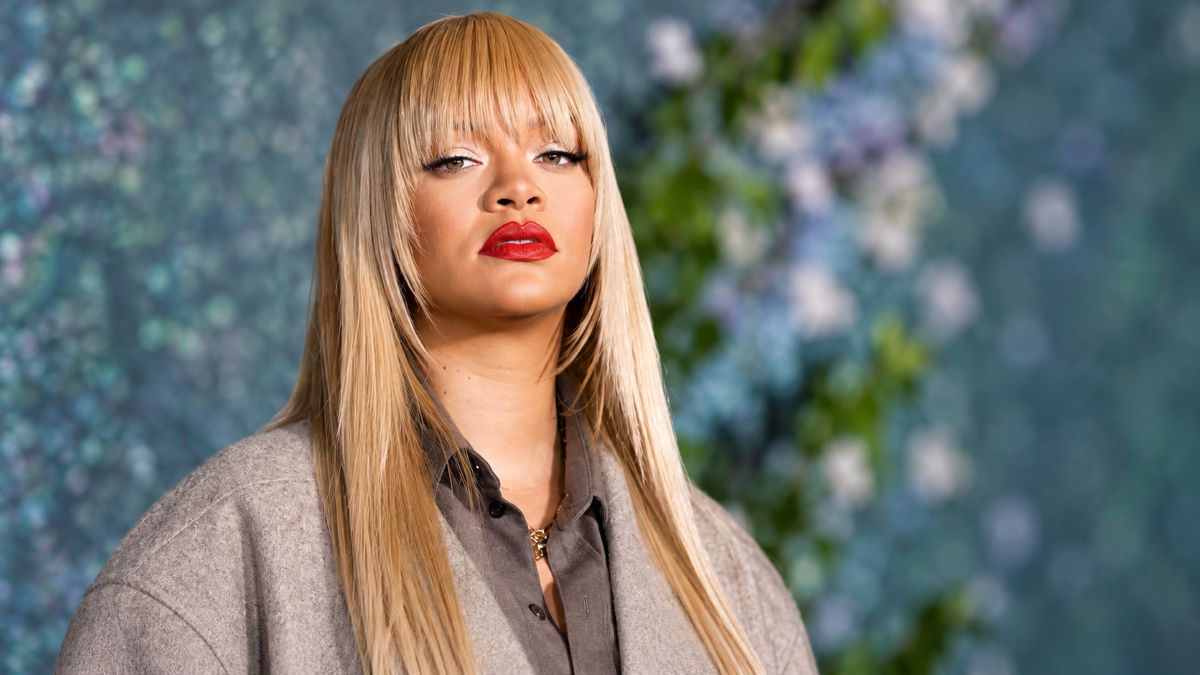
For much of Rihanna’s early career, the question was what song would come next. Her unmistakable voice, visual presence and run of pop hits made each new release an event. Today, any serious account of her influence also has to discuss what happened when she took those strengths into the beauty business. The transformation is bigger than a musician launching a product with her name on it.
Fenty Beauty changed the public conversation about who was being served by mainstream cosmetics. Its original range included forty foundation shades, an approach that became central to the company’s identity and the industry’s response. Rihanna’s move from performer to founder is a useful example of how celebrity influence can be converted into a business with a proposition people can evaluate apart from the star’s popularity.
Then: a musician who understood recognition
Rihanna emerged as a major pop performer in the 2000s, building an identity across recordings, videos, collaborations and live performances. Her music connected with a broad audience, but her cultural presence also grew through fashion and beauty choices that were widely copied and discussed.
That mattered for the business that followed. A performer who has spent years participating in visual culture may develop a detailed understanding of how audiences respond to color, presentation and perceived authenticity. Being famous does not automatically make someone a good product founder. But familiarity with an industry, a clear point of view and the ability to communicate it can provide a starting advantage.
The common celebrity-brand formula relies heavily on recognition: put a familiar face on a package and hope interest translates into sales. Rihanna’s beauty venture offered a more durable distinction because its selling point could be described without relying on her music career. The claim was that many consumers had been inadequately served by existing shade ranges, and the new line would address that gap more directly.
The forty-shade launch became a statement
Fenty Beauty launched with forty foundation shades, a figure highlighted in the brand’s own description through LVMH. The company emphasized a desire to include a broad range of skin tones and formulas designed for varied users. Rihanna’s stated motivation was that women who had traditionally struggled to find suitable products should feel recognized.
It would be simplistic to say no makeup brand offered diverse shades before Fenty. Many people and companies had worked on inclusion long before its arrival. Fenty’s impact came from making a wide range an unmistakable part of a major global launch, backed by substantial retail distribution and celebrity attention.
The public conversation moved quickly beyond individual products. Competitors faced questions about the breadth of their own offerings, and commentators began using the phrase “Fenty effect” to describe rising expectations around inclusion. The significance was not just a number on a press release. It was the shift in what audiences began to treat as a reasonable baseline.
Why inclusion had to become operational
A company can advertise diversity without ensuring that its products are readily available, appropriately formulated or reliably distributed. The more difficult work begins after launch: maintaining shade choices, responding to consumer needs and improving products as preferences and technologies change.
Fenty Beauty’s continued evolution illustrates that a successful celebrity business cannot depend on the initial announcement indefinitely. Product development has to answer to actual users, not simply to press coverage of its founder. Packaging, retail partnerships, reformulations and customer feedback eventually become central to the brand’s reputation.
This is also why Rihanna’s participation should not be measured only by the number of promotional appearances she makes. The more important question is whether the business continues to embody the stated idea: products intended for people who may have felt overlooked by more conventional offerings.
Now: a different form of cultural influence
The contrast between Rihanna on a concert stage and Rihanna as a beauty founder makes an easy retrospective image. Yet the underlying skill is not entirely different. Successful entertainers often understand how to build an identifiable world around an artistic identity. Fenty took a recognizable point of view and translated it into products that millions could choose to buy or reject.
Her transition also complicated expectations placed on women in pop music. An artist can remain musically important while devoting meaningful attention to other ventures. Fans may hope for more recordings, but the absence of a particular release schedule does not invalidate creative or business work happening elsewhere.
At the same time, business success should not be treated as proof that every commercial decision is beyond criticism. A founder’s celebrity can attract attention, but customers are entitled to judge the product on quality, price, availability and usefulness. That is part of the change from being primarily a performer to also serving consumers in another marketplace.
The limits of the celebrity-founder narrative
Many famous people have tried to expand into products that never developed a strong identity. Visibility can generate trial purchases, but it cannot guarantee repeat customers. A beauty company must address practical concerns such as matching skin tones, product performance and access to retail channels. These are not problems fame solves by itself.
Fenty Beauty’s defining choice at launch gave the public a testable promise. Did the range serve more consumers? Did the brand emphasize inclusion in the selection available on shelves? Those questions were more concrete than whether a product had a glamorous campaign photograph.
It is also important to distinguish Rihanna’s own creative intentions from the larger corporate and retail infrastructure required to deliver a global line. LVMH’s role and distribution relationships are part of the business story. A credible account recognizes both the founder’s vision and the system that helps turn it into an operating enterprise.
What changed between pop superstardom and Fenty
Rihanna did not stop being a defining pop figure when she began working in beauty. She expanded the forms in which her cultural influence could appear. An audience once associated her primarily with songs and images; another group came to know her through a foundation range and a brand built around a recognizable claim about representation.
The most telling difference is where the center of attention sits. Onstage, the performer is the principal product of the experience. In cosmetics, the customer is supposed to become the subject: the person finding a shade, trying a formula and deciding whether it works. The best celebrity ventures make that shift without losing the character that made the founder interesting in the first place.
That is why the “then and now” of Rihanna deserves more than a before-and-after photograph. The story is about a musician who moved from shaping popular taste through songs to influencing consumer expectations in another industry. Her lasting impact will be measured not just by recognition of the Fenty name but by whether a wider definition of who deserves to be served remains part of the beauty market.
Sources and further reading
- LVMH: official Fenty Beauty by Rihanna brand profile
- Forbes: the LVMH and Rihanna partnership (2019)
Comments (0)