
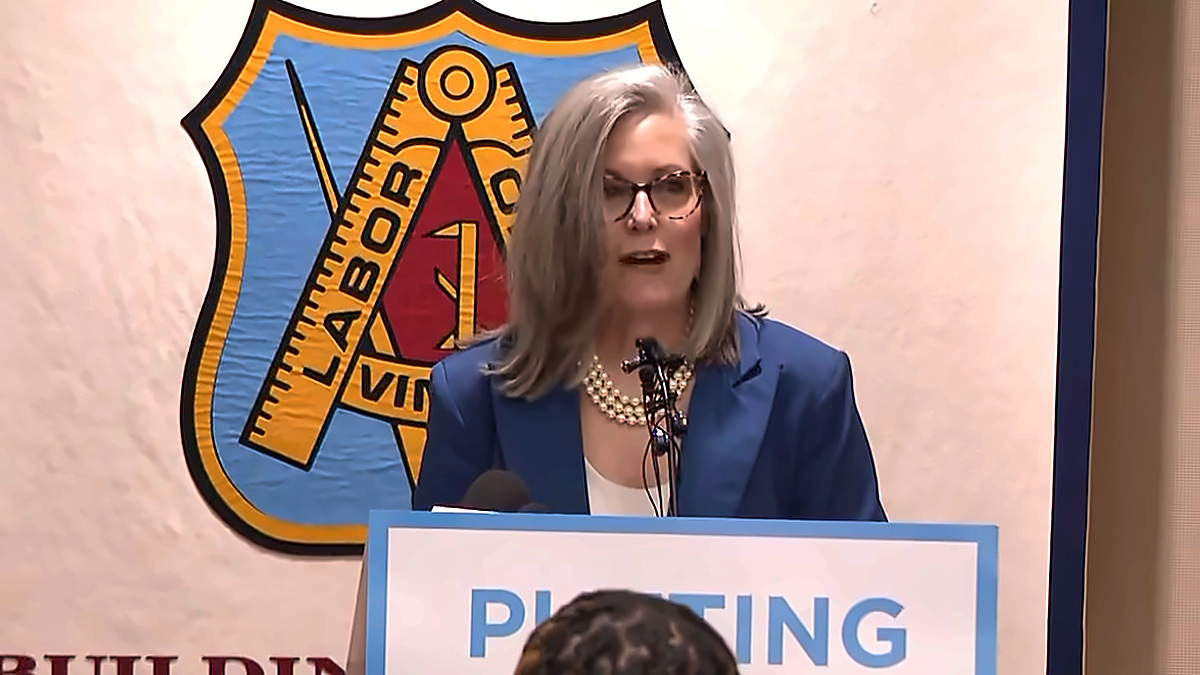
Arizona Gov. Katie Hobbs is entering a dramatically different political era after Democrats accomplished something their party had not achieved in the state for six decades.
Following the November 3 midterm elections, Democrats secured control of both chambers of the Arizona Legislature while retaining the governor's office. The result gives the party its first governing trifecta in Arizona since 1966.
For Hobbs, the change is particularly significant. During her first term, the Democratic governor repeatedly clashed with a Republican-controlled Legislature, vetoing hundreds of measures involving taxes, immigration, voting rules and other contentious issues.
Now she is preparing to work with lawmakers from her own party in both chambers. The shift could fundamentally change how Arizona approaches education, water policy, housing and the cost of living.
But it also presents Hobbs with a new political challenge. She will no longer be able to explain legislative gridlock simply by pointing to Republican opposition.
For the first time in generations, Arizona Democrats will have the opportunity — and responsibility — to demonstrate what they can accomplish when they control state government.
A Political Record Dating Back to 1966
The historical scale of the election result is difficult to overstate. According to the Associated Press, Republicans had controlled the Arizona House for 60 years. They had also held the state Senate since the early 1990s.
Those advantages provided Republicans with enormous influence over the state's legislative agenda even during periods when Democrats occupied the governor's office. The 2026 election reversed that arrangement.
The Associated Press confirmed the Democratic takeover of both chambers on Friday, November 6, after enough individual legislative races had been called to establish the new majorities.
The outcome was part of a broader national shift in which Democrats gained state legislative chambers and governor's offices across several battleground states.
Arizona's result stands out because it broke such a long period of Republican legislative dominance. It also confirms how competitive the state's electorate has become.
Arizona, once viewed as a dependable Republican state in presidential politics, has experienced significant political changes over the past decade. Population growth, suburban voting patterns, demographic shifts and evolving attitudes toward national issues have all contributed to a more contested political environment.
The 2026 results do not mean Republicans have lost their future competitiveness. They do mean that Democrats have reached a level of institutional control that was out of reach for generations.
Katie Hobbs Goes From Blocking Bills to Setting the Agenda
During her first term, Hobbs relied heavily on the veto to prevent Republican legislation from becoming law. According to the Associated Press, she rejected more than 540 measures.
Those vetoes reflected sharp disagreements over subjects including immigration enforcement, taxation, election administration and social policy.
A governor can use vetoes to block legislation, but preventing an unwanted policy is not the same as implementing an alternative.
With Democrats controlling both legislative chambers, Hobbs may now have a greater opportunity to advance proposals she previously struggled to enact.
Her stated priorities include addressing Arizona's water challenges, making life more affordable and increasing oversight of the state's school voucher program.
Each of those issues carries consequences for households, businesses and local governments. Water policy is especially important in a state experiencing long-term pressure on its supplies.
Growth in housing and commercial development must be balanced against agricultural needs, environmental considerations and the rights of communities that depend on limited water resources.
Affordability presents another difficult problem. Residents facing higher housing costs, insurance expenses and utility bills may expect state lawmakers to deliver immediate relief.
Yet proposals involving tax changes, new spending or regulatory intervention can generate disagreements even among politicians belonging to the same party.
School Vouchers Could Become a Major Battle
Arizona's school voucher system has been a prominent subject of political debate. Supporters argue that allowing families to direct public education funding toward alternative schooling arrangements gives parents greater control over their children's education.
Critics question the program's fiscal impact, oversight and potential consequences for traditional public schools.
Hobbs has called for stronger accountability and action against waste and abuse. Democratic legislative majorities could give those proposals a more favorable reception.
But the details will matter. Changes to eligibility, funding, transparency requirements or oversight mechanisms could affect thousands of families.
Lawmakers will need to consider both the experiences of participating households and the broader financial consequences for public education.
A party's election victory does not eliminate the need for careful policy design. Nor does it guarantee agreement among all Democratic legislators.
Moderate members representing competitive districts may face political pressures different from those confronting legislators in heavily Democratic areas. That dynamic could limit how aggressively the new majorities pursue certain proposals.
The End of One Political Excuse
Perhaps the most consequential change is not ideological but practical. For years, Arizona Democrats could point to Republican legislative control as a principal obstacle to implementing their agenda.
That explanation will be much less persuasive once their party controls both chambers. Voters will be able to evaluate Democratic governance through tangible outcomes rather than campaign promises.
Did housing become more affordable? Were public schools better supported? Did the state make meaningful progress on water security? Were public funds managed responsibly?
Those questions will shape the political environment heading into future elections.
Republicans, meanwhile, have an opportunity to reorganize their opposition and challenge Democratic policies on their merits. They will likely argue that unified Democratic control risks excessive spending, regulation or departures from conservative priorities.
That debate will become central to Arizona's next political chapter. The results of November 3 created a historic opportunity for Katie Hobbs. They also removed one of the most familiar explanations for why her legislative priorities could not advance.
For the first time since 1966, Arizona Democrats have the governing power they spent generations trying to win. The harder task begins when voters expect them to use it.