




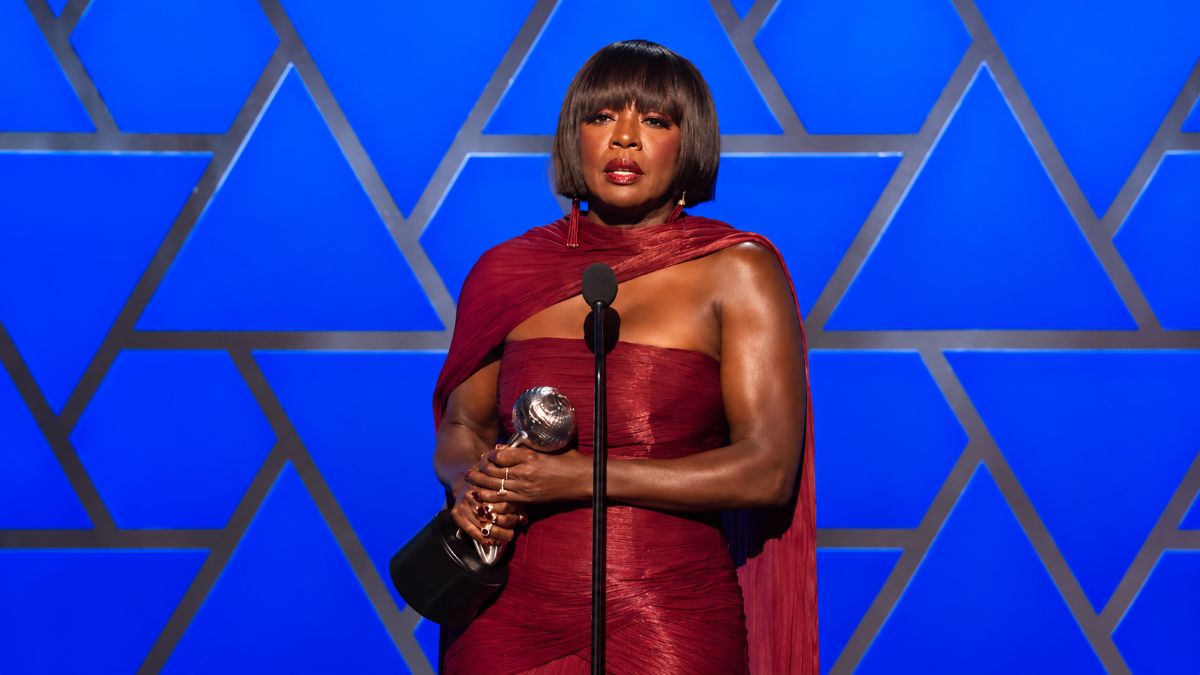
Viola Davis entered the group of entertainers known as EGOT winners in 2023, when the recording of her memoir Finding Me earned a Grammy. The acronym summarizes a rare combination of Emmy, Grammy, Oscar and Tony recognition, and it is understandably attractive to headline writers. Yet Davis’s own explanation of why she wrote the book reveals a more personal achievement than completing an awards collection.
In a 2023 Grammy interview, she said: “There are not enough words and pages to quantify one’s life.” The remark was striking because it recognized a limit that fame often pretends does not exist. A memoir gives its author space to tell a story in her own sequence, but even hundreds of pages cannot contain every memory, contradiction or change that makes a person who they are.
The difference between a career story and a life story
A standard profile of a major performer often begins with the career milestones. Davis has an acclaimed body of stage and screen work, including performances in Fences and How to Get Away With Murder. Her awards are documented achievements, and they helped establish her standing within an industry where opportunities have never been distributed evenly.
But Finding Me was not designed solely as a list of roles and prizes. The memoir returned to Davis’s childhood, the difficult experiences that shaped her, and the emotional work involved in understanding those experiences. By narrating the audiobook herself, she also made the telling an extension of the craft for which she is known: using voice to communicate a complicated human interior.
That made the Grammy unusually fitting. The award recognized a recorded performance, but the recording existed because Davis had chosen to speak publicly about elements of her own history. The project asked listeners to hear the person behind the characters rather than another interpretation of someone else’s script.
What Davis chose to emphasize
In an interview with the Recording Academy before the 2023 ceremony, Davis discussed the impossibility of reducing a life to a neat set of words or pages. The comment points toward a tension every autobiographical writer faces. An audience wants a clear arc—hardship, effort, success—while lived experience rarely follows such a tidy structure.
Davis’s account of childhood and later artistic work resists the idea that the final award or professional breakthrough erases everything that came before it. Recognition can change the circumstances of a life without retroactively making every earlier struggle necessary or acceptable.
This is one reason direct quotations matter in coverage of public figures. A quote allows an audience to encounter the speaker’s actual emphasis. When an interview is reduced to an uplifting headline, subtler claims about pain, memory or uncertainty can vanish. Davis’s own words retain the difficulty of the subject.
The Grammy completed an awards circle
The 2023 Grammy for Best Audio Book, Narration, and Storytelling Recording completed Davis’s EGOT. She already had Tony Awards for stage work, an Emmy for television and an Academy Award for Fences. The Grammy made the completion official.
In her acceptance remarks, she connected the memoir to her younger self. This was a different emotional frame from the standard awards-show narrative in which a performer thanks the usual people, celebrates a project and looks toward the next opportunity. Davis made the moment speak to a child who could not have known where the story would lead.
That choice explains why the speech resonated beyond the entertainment industry. It is possible to celebrate professional excellence while also acknowledging that the person receiving the honor has lived through experiences that applause cannot simplify. Davis presented the award as part of a larger journey rather than the sole definition of her worth.
The danger of turning every hardship into inspiration
Celebrity biographies can be eager to convert pain into an inspirational product. A difficult childhood becomes the first step toward an inevitable triumph; a public award becomes proof that everything was somehow meant to happen. Such narratives can be emotionally satisfying, but they risk treating real suffering as a storytelling device.
Davis’s work invites a more serious reading. Surviving difficult experiences does not mean those experiences were beneficial. Achieving later success does not mean every obstacle was necessary. A memoir can provide meaning without making a moral argument that adversity is secretly a gift.
Her willingness to discuss experience also does not entitle an audience to demand more disclosure. Choosing to tell one part of a story is not a promise to answer every subsequent question. That principle matters for performers whose personal histories are repeatedly treated as material for public consumption.
Owning the narrative after years of playing others
An actor’s professional reputation is built on entering the lives of fictional or dramatized characters. Davis’s memoir turned the direction of that work around. Instead of lending her emotional and vocal resources to someone else’s story, she determined the structure and content of her own.
That shift helps explain why Finding Me has a place in her career separate from the awards it received. It is a project about authorship as much as performance. The audiobook gives the listener a recognizable artistic instrument—Davis’s voice—applied to material that originates in her memory and judgment.
The result should not be romanticized as a final, complete answer to who Viola Davis is. Her own statement about the limits of language warns against that. The memoir is a chosen account, necessarily selective, and its value lies partly in recognizing that selectivity instead of pretending to eliminate it.
A bigger definition of achievement
There is nothing wrong with celebrating the EGOT. It represents extraordinary achievement in several demanding fields, and Davis earned each component through distinct projects and forms of performance. But the award is a summary of institutional recognition; it is not a complete biography.
Her 2023 comments encourage a different hierarchy. The career matters. The awards matter. The person telling the story matters more than the shorthand used to describe her success. A singer, actor or author can give an audience something powerful by deciding what to say, what to leave unsaid and how to make complicated experience legible.
That is why Davis’s words should remain central to the story of Finding Me. The acronym may draw readers into the article. The deeper subject is a celebrated performer reminding them that a life cannot be captured by a trophy shelf—or even by an entire book.
Sources and further reading
- Recording Academy: Viola Davis on Finding Me and her life story (January 2023)
- ABC News: Davis completes the EGOT with Finding Me (February 2023)
Comments (0)