


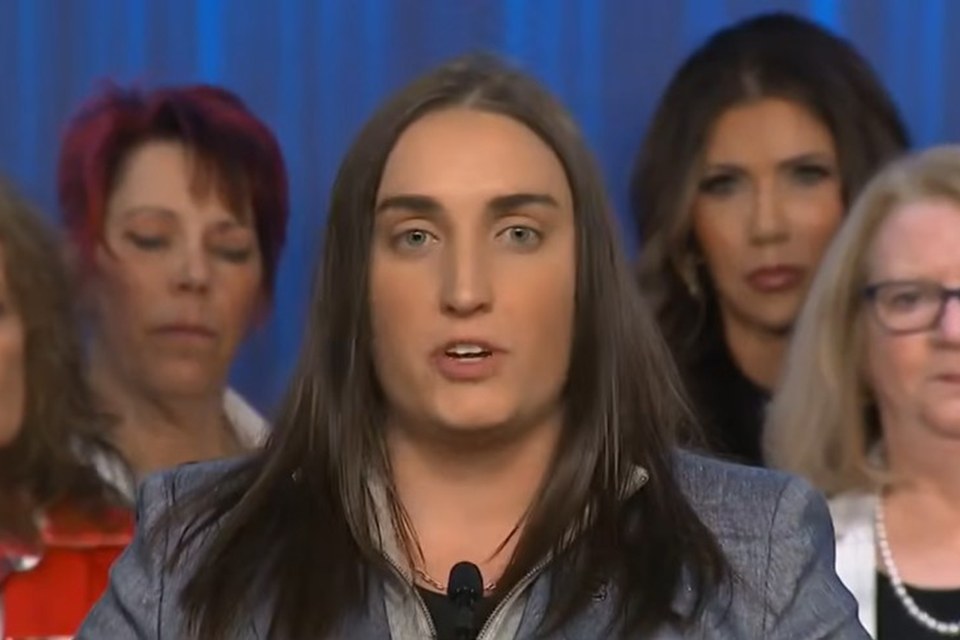
Political biographies are usually written for the public. The more complicated parts often surface much later, if at all. As Madison Sheahan leaves a top federal job to run for Congress, two stories are now drawing attention: one made for voters, and another from her past campaign relationship that is coming to light.
Sheahan’s background is the kind of pedigree that campaigns like to showcase. She served as deputy director at U.S. Immigration and Customs Enforcement, was a close ally of Kristi Noem, and says she helped implement policy during Donald Trump’s presidency. Now, she is running as a disruptor in Ohio’s 9th Congressional District, with a clear message: Washington is broken, and she can fix it.
Campaigns are not only about sharing a message. They are also about managing the story, and that is where things get more complicated.
A Rise Framed as Leadership — and Loyalty
Sheahan’s campaign highlights her experience leading large teams and driving rapid growth. Her résumé shows she has managed thousands of employees and helped organizations grow quickly. Supporters describe Sheahan as relentless, disciplined, and a strong supporter of the Trump agenda.
The backing of people like Noem gives a lot of credence to that image. In politics, it signals trust, loyalty, and steady beliefs, which matter in a tough Republican primary. Her campaign often talks about enforcement, protecting the economy, and restoring “American values,” which sets her apart from Marcy Kaptur, the longtime seat holder.
While Sheahan presents herself as a results-driven outsider, some critics and former colleagues now view her intensity in a more negative light.
Allegations That Recast the Narrative
Behind the polished campaign launch rests a story that reveals a darker side of power and control. A former junior staffer, speaking anonymously, describes a secret relationship that began near the end of the 2020 campaign. The staffer says it quickly became unbalanced.
The main issue is not only the relationship itself. It is the setting: a workplace hierarchy, blurred boundaries between personal and professional life, and claims of controlling behavior that crossed emotional and social areas.
According to the account, the relationship stayed secret while both women worked in the same political circles, sometimes with one reporting to the other. According to the allegations, the relationship was noted for jealousy, attempts to dictate personal behavior, and confrontations, which clouded any clear boundary between work and private life.
Sheahan has declined to respond directly, while her campaign flatly denies that the relationship took place. However, one thing is clear: having a lesbian relationship with a teen staffer is not going to be an easy sell in a Republican primary.
Power, Image, and the Politics of Control
Even without a clear outcome, the story creates tension that campaigns struggle to handle. It shows the gap between how leadership looks to the public and how it feels inside the organization.
In public, intensity can seem like strength. In private, if not managed well, that same trait can become something else entirely.
This kind of double standard is not unique to Sheahan. In her case, though, it ties into another issue that is rarely talked about in conservative politics: how personal identity is handled under strong beliefs. The allegations suggest she struggled with her sexuality and how the community views her. If true, this makes her campaign, which is based on traditional values, even more complicated.
It raises a tough question: what happens when being true to yourself conflicts with your political image?
A Race That’s No Longer Simply About Policy
The timing is what makes this story stand out. Sheahan is no longer behind the scenes; she is now a candidate seeking voters’ trust. In today’s campaigns, trust depends as much on character as on policy.
Meanwhile, Kaptur’s team is focusing on basic matters such as healthcare and the cost of living, quietly showing the difference between stability and change. This is a common strategy, but it works better when the other side’s story starts to fall apart.
What began as a typical primary race has become less predictable. Now, it is a trial not just of beliefs but also of trustworthiness.
The Tacit Risk for Rising Political Brands
There is a bigger point that neither side is talking about: the era of carefully managed political images is ending. Staffers who once stayed quiet are now more willing to speak out. That happens even more when their personal experiences do not match the public image.
For candidates like Sheahan, who built their careers in intense, loyalty-driven environments, this change brings new risks. The same qualities that helped them rise—intensity, control, and strong focus—can look like weaknesses when seen through the lens of individual behavior.
In this sense, the story is not simply about one candidate. It is about a changing political world, where the distinction between private actions and public responsibility is thinner than ever.
As Sheahan continues her campaign for Congress, the real question may not be whether voters believe one version of her story or the other. The true issue is whether they are willing to accept that both could be true at the same time.

Comments (0)