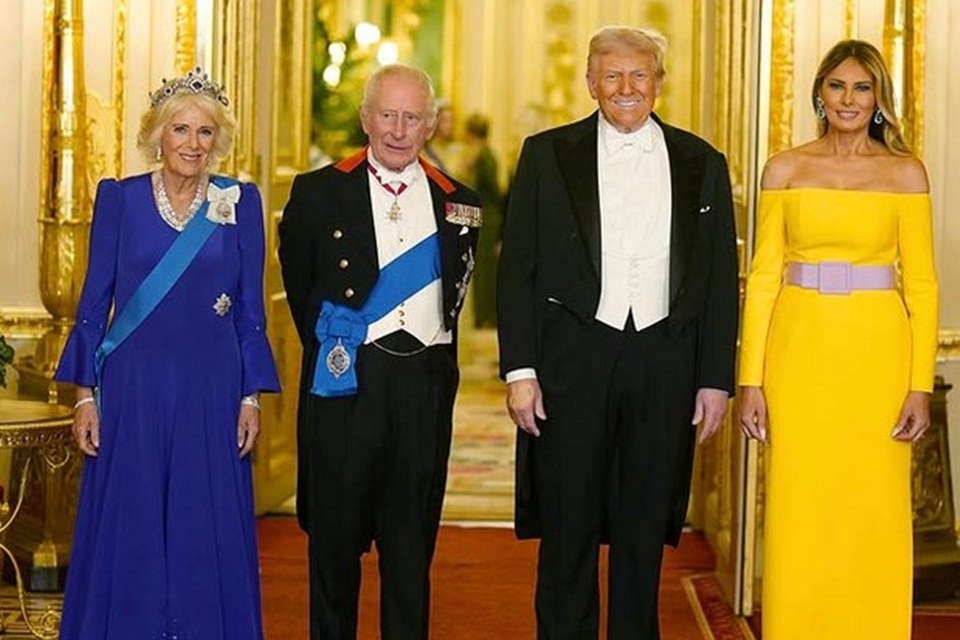
The timing could hardly be more awkward. In just a few days, King Charles III will arrive in the United States for a State Visit filled with the usual pageantry meant to show Western unity. But beneath the surface of the so-called “Special Relationship,” the diplomatic foundations have collapsed.
A leaked Pentagon memo shows that Washington is now considering pulling its diplomatic support for British control of the Falkland Islands, even referring to the territory as a European “imperial possession.”
At first glance, this appears to be a sudden shift in American foreign policy toward Argentina’s President, Javier Milei, who shares similar views. But a closer look at the leaked documents points to a deeper geopolitical reality. The Falklands are being used as leverage, not as the main target.
The White House is making it clear that unconditional alliances are over, and now a country’s territorial security depends on its willingness to support Washington’s military actions.
Sovereignty as a Subscription Service
The spark for this major shift is the ongoing US-Israeli military campaign against Iran. Frustrated by NATO allies’ reluctance to take offensive action — especially Prime Minister Keir Starmer’s refusal to send British troops beyond defensive roles — Donald Trump appears to be targeting Europe, where it is most vulnerable.
This is the new, unspoken message from the Pentagon: democratic self-determination is no longer seen as an absolute right guaranteed by the post-WWII order. Instead, it is treated like a premium subscription. If London does not support US actions in the Strait of Hormuz, its protection in the South Atlantic could be withdrawn without warning.
This is a striking use of anti-imperialist language by an “America First” administration. By threatening to support Argentina’s claim to the islands, Washington is turning Britain’s colonial legacy into a bargaining chip to force military cooperation. Britain is not the only country affected; the same memo even suggests suspending Spain from NATO as punishment for refusing to open its airspace and bases for Middle Eastern operations.
Cold Winds in Stanley
In the South Atlantic, the geopolitical struggle feels very real. For the roughly 3,600 people living on the Falkland Islands, these threats from Washington bring back vivid memories of 1982.
In Stanley, the capital, people feel a mix of tired defiance and quiet fear. Islanders, who voted overwhelmingly in 2013 to stay a British territory, are used to Argentina’s political pressure. But a betrayal by the United States is a completely different kind of threat.
Veterans and longtime residents see a special risk posed by a populist American president known for unpredictable foreign policy. Islanders now realize that their strongest protection — the support of a global superpower — has suddenly become unreliable. If a leader is willing to abandon decades of diplomatic neutrality to settle a personal dispute with Downing Street, peace in the South Atlantic seems very fragile.
The Domino Effect on the Eastern Flank
While the immediate concern is the Falklands, Washington’s pressure tactics are being felt as far as the Russian border. The impact on the 76-year-old NATO alliance could be severe.
If the United States is ready to punish Britain over a conflict in Iran and even considers suspending Spain, the core promise of mutual defense is weakened. Leaders like Poland’s Prime Minister Donald Tusk are now openly asking: If Article 5 depends on meeting all the President’s military demands, can Eastern Europe really trust American support if Russia invades?
The White House says its tough approach is needed to shake up the system and make Europe less dependent on American defense. From Washington’s point of view, allies should not expect US protection from Iranian missiles if they refuse to help remove the threat.
A Royal Visit to the Minefield
This puts the British government in a very difficult position. Starmer’s team is trying hard to appear calm, repeating that the islands’ sovereignty is not up for discussion and dismissing the Pentagon leak as unimportant.
Even though opposition parties are demanding the royal tour be canceled, Downing Street insists the King’s visit will continue to show the “deep roots” of the US-UK relationship.
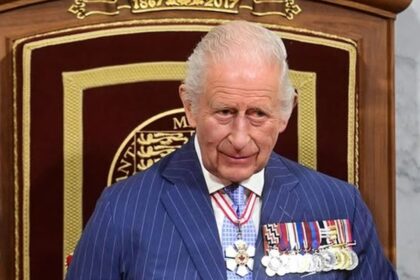
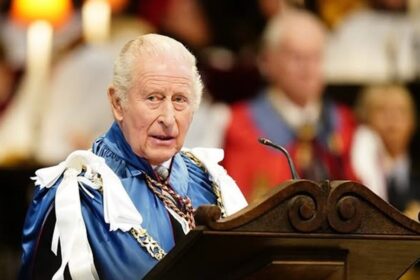
Still, sending the King to Washington now is a risky move. King Charles is being placed in a difficult diplomatic situation. People in the Falklands are already asking him to “step up to the plate” and use his meeting with the President to set clear boundaries.
But setting boundaries only works if the other side respects them. As the King prepares for his trip to America, it is clear to London, Stanley, and the rest of Europe that the old rules no longer apply. The “Special Relationship” now comes with terms and conditions that can change at any time.