


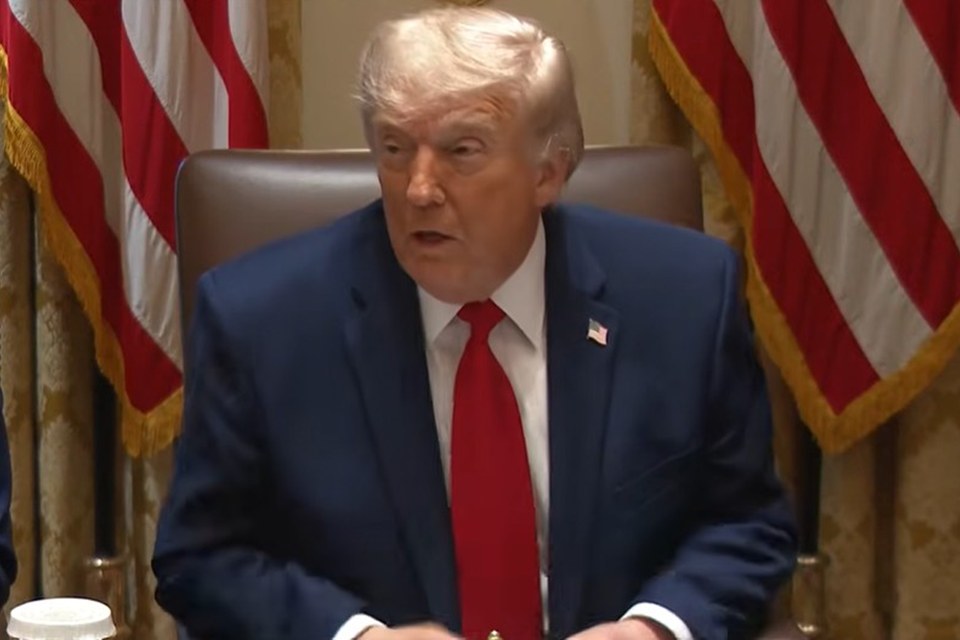
President Donald Trump has long made physical strength a key part of his political image. He does more than say he is healthy. He points to his stamina, toughness, and sharp mind as proof that he stands apart from the politicians he criticizes.
That is why the silence around his latest medical exam is drawing more attention than the exam itself.
After spending several hours at Walter Reed National Military Medical Center, Trump posted on social media that everything had gone “perfectly.” This was typical Trump: direct, certain, and meant to stop questions before they could build.
But the White House has not released the usual formal medical summary that gives the public a basic idea of the president’s health. There is no detailed letter from a doctor, no updated numbers, and no official explanation to back up the president’s claim.
For a president nearing 80, this lack of information is not just a minor communication problem. It is the main issue.
Donald Trump’s Missing Medical Report Sparks Health Questions
The question now is not whether Trump says he feels well. He does, and he says it loudly.
The real question is why the public is expected to accept that answer without any supporting documents.
Trump is the oldest person ever to take office as president, and age is now a major issue in American politics. After years of questions about President Joe Biden’s health, Trump now faces the same standard: the presidency is not just any job, and it is reasonable for voters to want more than just a personal claim of good health.
The White House’s delay has created the kind of information gap that political teams usually try to prevent. In this gap, every photo, stumble, bruise, hospital visit, and unclear explanation becomes part of a bigger guessing game for the public.
That is the risk of holding back basic information. It does not stop speculation. It encourages it.
White House Silence Turns Trump’s Walter Reed Visit Into a Political Problem
Trump has always understood the importance of image. His movement partly relies on showing him as a strong negotiator, a tireless campaigner, someone who can outwork rivals, outlast critics, and turn his confidence into political theater.
Trump’s health has long been part of the way he sells himself to the public.
During his first presidency, medical updates were often delivered in a way that reinforced his image as unusually strong and energetic. His former doctor, Dr. Ronny Jackson, drew attention for praising Trump’s health and genetics in especially flattering terms. Those moments helped turn presidential medical briefings into another fight over image, loyalty, and credibility.
That history still matters. The health updates of the leader of the free world have never been treated as purely medical events. They have been linked to Mr. Trump’s identity as a political character. The former reality TV star needs to appear vigorous, dominant, and fully in control.
But the old formula may be losing its power. A president can look strong on camera and sound forceful at a podium. Still, when questions about health start piling up, only clear medical facts can close the door.
Now the strategy may be backfiring. Tough talk can dominate a campaign rally, but it cannot replace hard medical details. At some point, the public needs more than confidence. It needs documentation.
Medical Experts Raise Alarm Over Lack of Health Transparency
The absence of a released report has already brought strong criticism from medical experts outside the administration.
Dr. Jonathan Reiner, a professor at George Washington University and longtime cardiologist to former Vice President Dick Cheney, said publicly that not even sharing a basic health statement raises clear concerns. His point was simple: if there is nothing important to hide, refusing to share information is hard to explain.
This does not mean the public knows something is wrong. It just means the administration has left space for people to wonder.
In presidential politics, public opinion can change quickly. A delayed memo can turn into a mystery, which then becomes a story, and that story can become a problem.
People on social media have already filled the gap with bold theories, saying the White House must be hiding something. Some of these claims may be exaggerated, while others may be just political. But the administration’s silence makes these claims harder to dismiss.
Transparency is not just about pleasing critics. It is about stopping rumors before they spread.
Trump’s Strongman Image Faces a New Test
The bigger issue is not just about health. It is about official responsibility.
A president’s health affects national security, the economy, elections, and even the Constitution. When the president has a medical exam, the public is not just looking for gossip. People want to know if the person with the nuclear codes, executive power, and global responsibilities is able to do the job both physically and mentally.
That standard should apply to everyone, no matter their political party.
Trump’s team may think that sharing fewer details protects him from too much media attention. But holding back information can have the opposite effect. It can make them seem defensive and turn normal health care into a political issue.
There is also a new factor now: Trump’s past criticism of Biden’s age and health may have set a higher standard for himself. After years of saying the public should question an older president’s ability, Trump now has less reason to call questions about his own health unfair.
He made age a key campaign issue. Now, that issue is coming back to him.
Trump’s Own Fitness Attacks Come Back to Haunt Him
Trump’s supporters will likely argue that the president’s schedule, public appearances, and combative style prove he remains fully capable. His critics will point that the missing medical report constitutes part of a broader pattern of concealment and image management.
But the real test is simpler. A president who says his health is perfect should have little to lose by allowing his doctor to say so officially.
Until that happens, the story will not be about Trump’s confidence. It will be the White House’s silence.
And for a political figure who has spent decades changing every room into a stage, the most damaging thing may not be what the medical report contains.
It may be the suspicion created by keeping the curtain closed.
Update: Trump’s team opted to release the report late Friday night and claims the president is in “excellent health.”
Comments (0)